
CNC Turning vs VMC Machining: Which Process Fits Your Component?
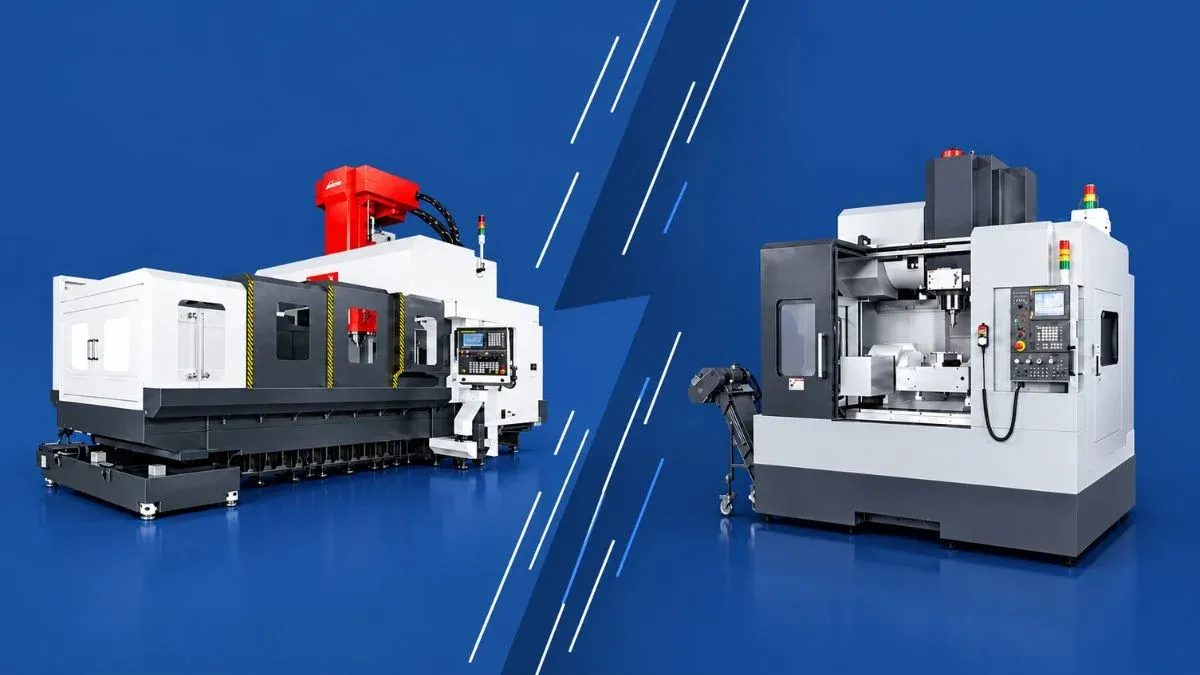
CNC turning and VMC (Vertical Machining Centre) machining are two important manufacturing processes used to produce precision components for OEM manufacturing and industrial applications. CNC turning uses a rotating workpiece and cutting tools to manufacture cylindrical parts, threaded components, brass fittings, shafts and connectors. VMC machining uses rotating cutting tools to machine stationary workpieces, making it suitable for producing complex shapes, slots, grooves, pockets and flat surfaces with high dimensional accuracy.
Choosing between CNC turning and VMC machining depends on the component design, material, dimensional tolerances, production volume and machining requirements. CNC turning is ideal for round and symmetrical components, while VMC machining is better suited for components requiring multiple surfaces, intricate geometries and precise milling operations. Selecting the right machining process helps manufacturers improve production efficiency, maintain consistent quality and meet specific OEM component requirements.
Princy Industries Pvt. Ltd., based in Jamnagar , specializes in precision engineering, CNC machining and high-quality custom industrial components for global OEM manufacturers.
CNC Turning vs VMC Machining Difference
| Comparison Factor | CNC Turning | VMC Machining |
|---|---|---|
| Working Principle | The workpiece rotates while the cutting tool removes material. | The cutting tool rotates while the workpiece remains fixed. |
| Component Shape | Ideal for cylindrical and round components. | Suitable for complex, flat and multi-surface components. |
| Common Applications | Brass connectors, shafts, threaded fittings and bushes. | Mounting blocks, machine parts, housings and precision plates. |
| Main Operations | Turning, facing, grooving and threading. | Milling, drilling, boring and tapping. |
| Design Complexity | Best for symmetrical components and round profiles. | Best for components with slots, pockets and complex geometries. |
| Production Efficiency | Efficient for high-volume production of cylindrical parts. | Efficient for components requiring multiple machining operations. |
| Material Removal | Material is removed from a rotating workpiece. | Material is removed using rotating cutting tools. |
| OEM Applications | Custom brass turned parts, electrical fittings and precision connectors. | Custom mechanical components, industrial housings and mounting parts. |
Key Factors for Choosing the Right Machining Process
- Component Geometry determines whether CNC turning or VMC machining is more suitable for the required shape and design.
- Dimensional Accuracy helps ensure the selected process meets component tolerances and engineering specifications.
- Production Volume influences machining efficiency, cycle time and manufacturing costs for OEM orders.
- Component Requirements such as threading, slots, holes and multiple machined surfaces help identify the most appropriate manufacturing process.