
Choosing Brass, Stainless Steel or Aluminium for Components
Material selection plays an important role in precision component manufacturing, influencing product performance, durability, machinability and overall production cost. Brass, stainless steel and aluminium are widely used materials for CNC machined components, custom OEM parts, industrial fittings and engineered assemblies. Each material offers distinct properties, making it important to evaluate the component design, operating environment and functional requirements before choosing the most suitable option.
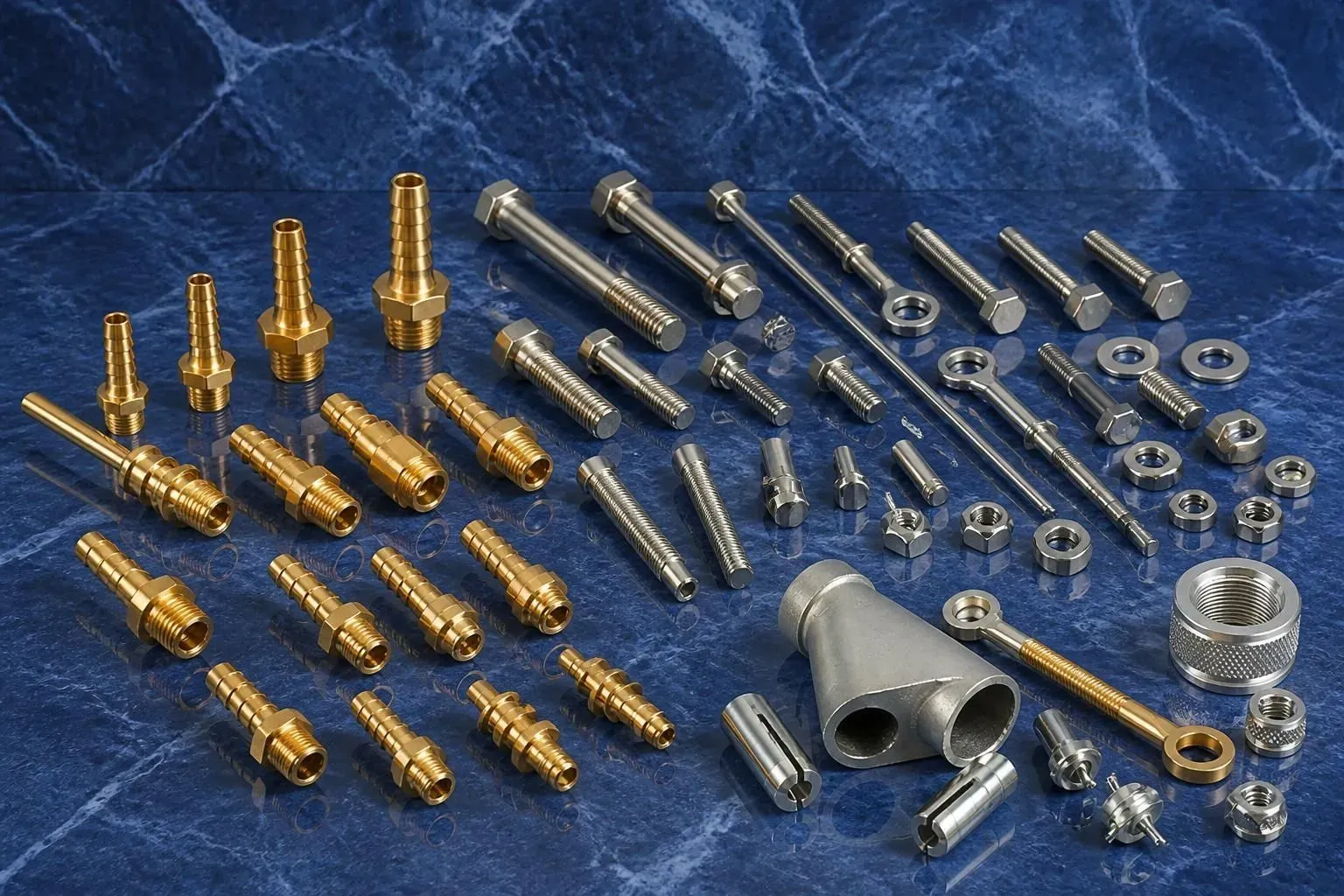
Brass is often preferred for precision turned components, connectors and fittings because of its good machinability and corrosion resistance. Stainless steel is suitable for applications requiring strength, durability and corrosion resistance, while aluminium is commonly selected for lightweight components with good machinability. Comparing their properties helps OEM manufacturers and industrial buyers select the appropriate material for reliable performance, manufacturing efficiency and application-specific requirements.
Princy Industries Pvt. Ltd., based in Jamnagar , specializes in precision engineering, CNC machining and high-quality custom industrial components for global OEM manufacturers.
| Comparison Factor | Brass | Stainless Steel | Aluminium |
|---|---|---|---|
| Key Properties | Good machinability and corrosion resistance | Strength, durability and corrosion resistance | Low density and good machinability |
| Weight | Moderate to high | High | Low |
| Machinability | Generally excellent for suitable grades | Depends on grade and machining conditions | Generally good for suitable grades |
| Corrosion Resistance | Good in many suitable environments | Good to excellent depending on grade and environment | Good due to its protective oxide layer |
| Common Components | Connectors, fittings, inserts and turned parts | Fasteners, industrial parts and precision fittings | Housings, lightweight parts and mounting components |
| Typical Applications | Electrical, plumbing, hydraulic and pneumatic systems | Industrial machinery, automotive and demanding environments | Automotive, electrical and lightweight industrial equipment |
| Material Selection Priority | Machinability and reliable connections | Strength and environmental resistance | Weight reduction and efficient machining |